Showing posts with label South Indian Recipes. Show all posts

Sunday, 15 July 2012

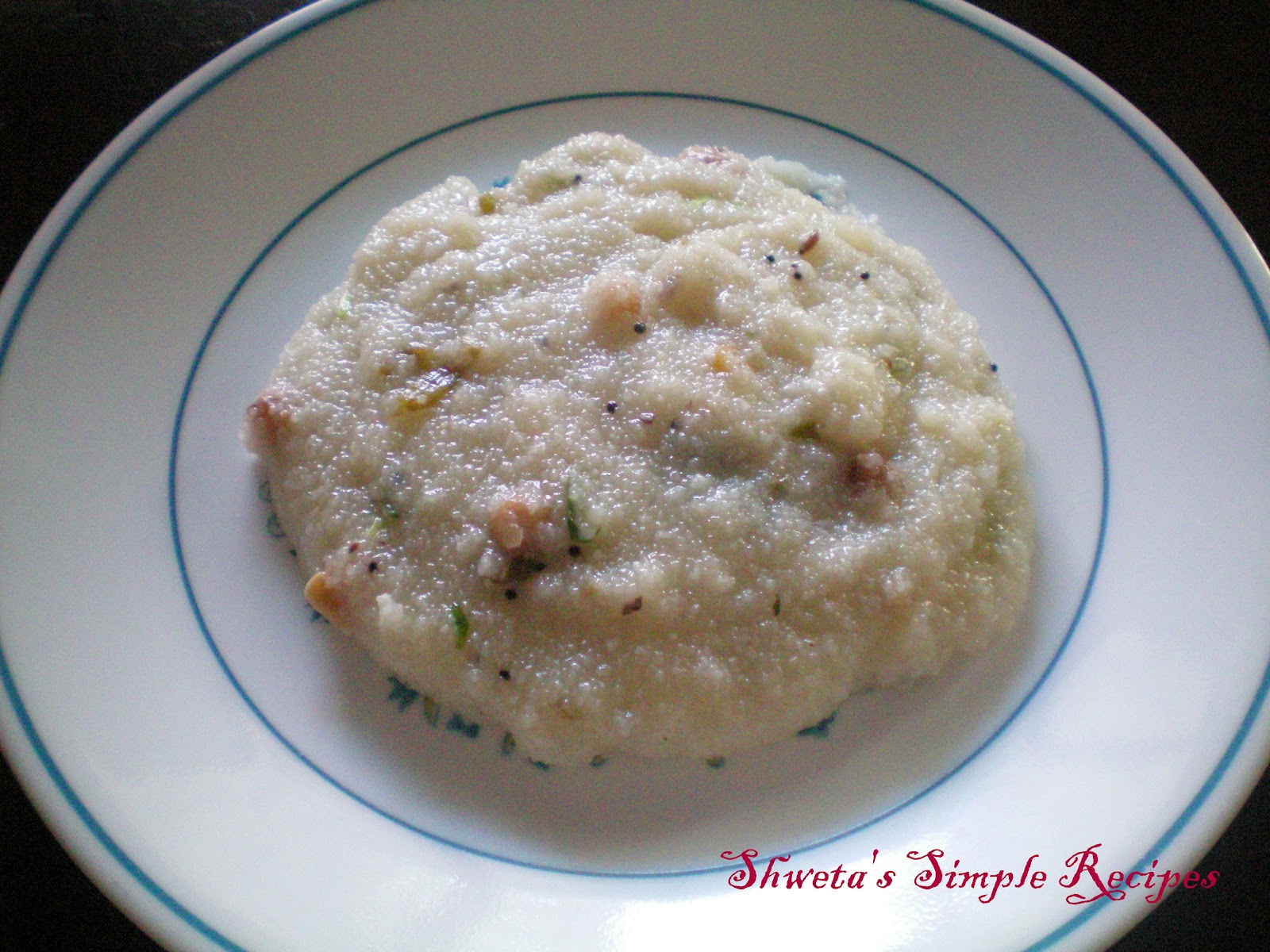
Rava Upma - Andhra Style

Rava Upma - Andhra Style

Upma is originally from South India and is a popular breakfast across India.

There are many ways of preparing upma. Today, I am blogging what I call the Andhra style upma recipe. I have noticed a lot of difference in the upma that is made in Maharashtra and Andhra. In Maharashtrian upma, we add sugar and the upma is a bit thick. But in Andhra most of the times, I have had upma in restaurant's which was quite different in taste, texture, and a bit liquidy. It was also served with a special chutney that adds to the taste of this upma and is called tomato pachadi which I just loved. So at Home, I make two types of upma one is the Maharashtrian style upma ...and the other one is the Andhra style upma...which I am blogging today. You can also check my other post on Upma - Maharashtrian Style.

Ingredients:
  • 1 cup rava/suji/semolina
  • 1/2 onion finely chopped
  • 1/2 tea spoon finely chopped ginger
  • 2 finely chopped green chillies
  • 5-6 curry leaves
  • 1/2 tea spoon mustard
  • 1/2 tea spoon jeera
  • 1 tea spoon peanuts
  • 2 tea spoon cashew nuts
  • 1/2 tea spoon chana dal
  • 1/2 tea spoon hing
  • salt to taste
  • 2 table spoon oil
  • 2 table spoon fresh grated coconut
  • 1 table spoon finely chopped coriander leaves
  • 5 cups water
  • 1-2 tea spoon ghee

Method:

Heat a kadai and dry roast rava for five to eight minutes stirring continuously, till a nice aroma comes out. Don't let the rava turn brown. Remove from heat and keep aside.

Now, heat oil in a kadai, add mustard seeds when they splutter, add cumin seeds, peanuts, cashew nuts, chana dal, ginger, curry leaves, green chillies and hing. Fry for a minute.


Add chopped onion, fry till its turns transparent.


Now, add 5 cups water and salt. Once the water starts boiling, add grated coconut and coriander leaves. Mix well.


Add the roasted rava/semolina slowly little by little, stirring constantly to prevent lumps from forming.


Cover and cook till the rava absorbs the water and becomes slightly thick, thick dosa batter consistency (as shown in the picture below). Add ghee and mix. Please note that the upma gets thick once it becomes cold. So, it is better to have when it is really hot.


Now turn off the heat. Your upma is now ready to be served.


Serve hot with Tomato pachadi.


Saturday, 30 June 2012

Vegetable Sagu

Vegetable Sagu


Mixed vegetable sagu is a popular dish in most parts of South India. This dish goes well with puris, Chapati, dosas, appam, and rice. The first time I had this dish was in one of the restaurants in Hyderabad and just loved it. Tried it many times at home and finally came up with this recipe. There are various ways of making sagu, but this is how I prepare it.


Ingredients:

For sagu masala: (makes around 1/2 cup of masala)
  • 2 tea spoon urad dal
  • 1 -2 roughly chopped green chillies
  • 4-5 kalimeeri (peppercorns)
  • 2 tea spoon coriander powder (dhania)
  • 1/2 tea spoon cumin seeds (jeera)
  • 1/2 inch cinnamon stick (dalchini)
  • 3 lavang (cloves)
  • 4 table spoon grated dry coconut
Other Ingredients:
  • 2 cups chopped mixed vegetables (carrot, beans, green peas, potato)
  • 1 finely chopped onion
  • 8 -10 curry leaves
  • 1 tea spoon mustard seeds
  • 1/2 tea spoon hing
  • 1 tea spoon urad dal
  • 2-3 dry red chillies broken into half
  • 1/2 tea spoon turmeric powder/Haldi
  • 2 1/2 table spoons sagu masala
  • 2 tea spoon red chilli powder
  • 5 table spoon freshly grated coconut
  • 8-10 cashew nuts
  • coriander for garnishing
  • 2 table spoon oil

Method:

To make sagu Masala:

Take a pan and dry roast urad dal on a medium flame, stirring continuously till it becomes golden brown in colour and keep aside.

In the same pan dry roast grated dry coconut on medium flame till it becomes golden brown and keep aside.

Then dry roast green chillies and keep aside.

When cool, take roasted urad dal, roasted dry coconut and roasted green chillies in a blender along with all the other ingredients listed under sagu masala and grind it into a fine powder. You sagu masala is now ready to be used in the vegetable.
 

To make vegetable sagu:

Heat oil in a vessel (kadhai). Add mustard seeds when they splutter, add urad dal, curry leaves, dry red chillies, hing and haldi. Fry well. Add onions and saute them on medium flame till they turn translucent.

Now add all the vegetables and saute them for a minute, then add 2- 3 cups of water and salt, mix well, cover and cook the vegetables till they turn tender. Do not overcook the vegetables. The vegetables should neither be raw nor too mushy

In a small pan take some oil and roast 2 1/2 table spoon of sagu masala and 2 tea spoon of red chilli powder for half a minute, then add 1/2 cup of water and boil so that the masala doesn't burn. Now add this to the above vegetable.

Make a fine paste of freshly grated coconut and cashew nuts with a bit of water and add this to the vegetable. Mix gently, add water if required and simmer it for five to ten minutes. Turn off the heat.

Garnish it with coriander leaves

Serve it hot with puri, chapati, dosa etc...


Tuesday, 5 June 2012

Pulihora/Tamarind Rice

Pulihora/Tamarind Rice

Pulihora, Puliyodhara, or Chitrannam is a very common preparation in Andhra Pradesh, Tamil Nadu, Karnataka. Puli means sour in taste.

It is made with tamarind as an ingredient and is very popular in southern India.

In the districts of Andhra Pradesh, it is considered as a festival food. It is given as prasad in temples.

Ingredients:
  • 5 cups cooked rice or leftover rice(rice with each grain separate)
  • 4-5 slit green chillies
  • 2 dry red chillies
  • 10-15 curry leaves
  • 1 tea spoon finely chopped ginger
  • big lemon sized tamarind
  • 1 table spoon sesame seeds powder
  • 1 table spoon roasted peanuts powder
  • 1 tea spoon ready made rasam powder
  • salt to taste
  • 1-2 tea spoon sugar
  • 3 table spoon raw peanuts
  • 1 tea spoon urad Dal
  • 1 table spoon chana Dal
  • 1 tea spoon mustard seeds
  • pinch of hing/asafoetida
  • pinch of cumin seeds/jeera
  • 1 tea spoon turmeric powder/haldi
  • 3 table spoon oil

Method:

Soak tamarind in hot water and remove juice.

Heat oil in a vessel, add mustard seeds. When the mustard seeds start popping add dry red chillies, cumin seeds, urad dal, channa dal and raw peanuts . Fry for a minute till they turn light brown in colour.

Now add  green chillies, curry leaves, asafoetida and turmeric powder. Stir fry for half a minute.

Add Tamarind juice, salt, sugar and rasam powder. let it boil for few minutes then add sesame seeds powder and roasted peanuts powder. Cook till oil separates and the masala paste becomes a bit thick. The masala should not be very watery nor too thick. Check the seasoning. Then add cooked and cooled rice. Mix well so that all the rice is coated with pulihora masala.

Cover the vessel and let the rice heat through. Then turn off the heat.

Pulihora is now ready.


Saturday, 11 February 2012

Appe(Paniyaram)

Appe(Paniyaram)
Ingredients:
  • 1 cup urad dal
  • 2 cup rice
  • salt to taste

Method:

Wash the urad dal and rice, soak in water separately for 6-8 hours.

Now grind them with a bit of water into a smooth batter. Do not make the batter very thin. The batter should be thicker than dosa batter.

Transfer the batter in a steel vessel, cover and keep aside overnight for fermentation.

Next day the batter will rise due to fermentation. Now add salt and mix properly.

Heat the appe pan, add generous drops of oil in each of the compartment. Now add the batter in the compartments.


Cover and cook. When it gets golden brown, turn it over with a spoon, add a bit of oil and fry from the other side.


Serve hot with Chutney.


You can do a variation by taking some batter separately and adding some onions,green chillies and coriander to the batter then remove the appe in the same way as said above.


Related Posts Plugin for WordPress, Blogger...